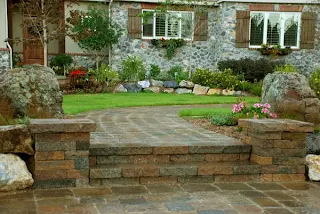
What Stone Should You Choose For Pavers?

Pavers are the beauty of any property, be it a house, hotel or resort. Therefore, no matter what kind of project you have, you have to be very particular about the paving stone as there are varieties of paving stones to choose from. Each stone has its utility and meant for specific purpose. For instance, there are some stones which are well suitable for paving around your pool and spa, while there are others which are ideal for paving garden area. So the choices are abundant that tells you to be over attentive.  

Brick pavers: These paving stones are made out of cement, sand, fine aggregate and water. All the ingredients are mixed well and are heated at high temperature. They give an impression of raw bricks and last for a lifetime. They are kwon to be highly versatile and durable.

Concrete pavers: There are unlimited style, color anddesigns for concrete pavers. These stones are highly preferred because of their ability to be safe, strong, versatile, durable and adaptable to all weather conditions.  Besides, these are extremely easy to install, maintain and repair. Mostly, interlocking stones are manufactured that provides the ease the installation and unique designs.  

Stone pavers: Naturally occurring stones are used for pavers. Usually, they are mined from the quarries or are collected from the rocky outcrop. Unlike other pavers, these are not manufactured, still there are lots of varieties in stone design and colors, and most exciting part is that they all exist naturally. However, these stones are a bit expensive, yet are highly popular.

Comments

  1. Thanks for sharing this. I have been considering using paving stones to help make my backyard look a lot better than it is right now. I have been looking online for some ideas that I could use for this big project. I hope to get it started soon while the weather is really nice.

    ReplyDelete

Post a Comment

Popular posts from this blog

How Do You Cut Bluestone?

When laying bluestone pavers or tiles in your home, you may come across situations when you need to cut them in order to get the perfect fit. Cutting through natural stone, however, can be a difficult task, as the tiles are prone to splitting and chipping with even the slightest pressure. Use these instructions to ensure you get a professional finish with your stone: Step 1: Measure where you will need to make cuts on your bluestone tiles and mark out these lines on the face of the tiles using a metal square and a white crayon. Measure twice to avoid mistakes. Step 2: Set up the power cutter that you have rented from your local hardware store. Place a piece of scrap wood on the bed so that, once the blade has gone through the stone, it will go into the wood and not the bed of the cutter. Make sure that the water reservoir is filled. Step 3: Place the bluestone tile on top of the piece of wood. Then, set the cutter’s blade so that it will make an incision between a quarter a...

How To Clean A Travertine Backsplash

When it comes to choosing a natural stone for your kitchen’s backsplash, one of the more popular tiling options is travertine. Not only is this stone incredibly attractive and able to blend with most decors, it is extremely resistant to staining. This makes it the perfect option for the kitchen, where cooking mishaps and mess are part of the norm. But how do you keep your travertine looking as good as new? Step 1: In a spray bottle, mix together 2 cups of water and 2 squirts of household dishwashing detergent. Then, add in half a cup of baking soda, put the lid on and shake to ensure that all of the ingredients are combined. Step 2: Spray the solution onto the travertine backsplash, then wipe the tiles clean using a damp cloth. This solution is safe to use whenever you need to clean the backsplash. Step 3: For stubborn stains, mix together baking soda and some water. Stir the ingredients until a thick paste has formed, making sure that you have prepared enough to co...

How To Remove Burn Marks From Granite

When granite is used as a bench top material in the kitchen it can sustain serious burn marks if hot pots are left on the surface, and when used as a vanity top in the bathroom a curling iron that has been left on can have a similar effect. If you have been unfortunate enough to notice burn marks on the surface of your granite, you will probably be interested in how you can go about removing them. Step 1: Wet the area of the granite that has sustained the burn mark using some clean, cold water. Then, using a very fine grade of sandpaper, begin sanding the mark off. Make sure that you use a gentle, circular motion to avoid causing further damage. Step 2: Wipe the area down with a soft, damp cloth to remove any debris. Then, using an even finer grade of sandpaper, continue to sand the granite. Again, be sure to only use a gentle, circular motion. Step 3: Rinse the area with cold water and dry thoroughly with a clean cloth. If you are satisfied that the burn mark has been rem...